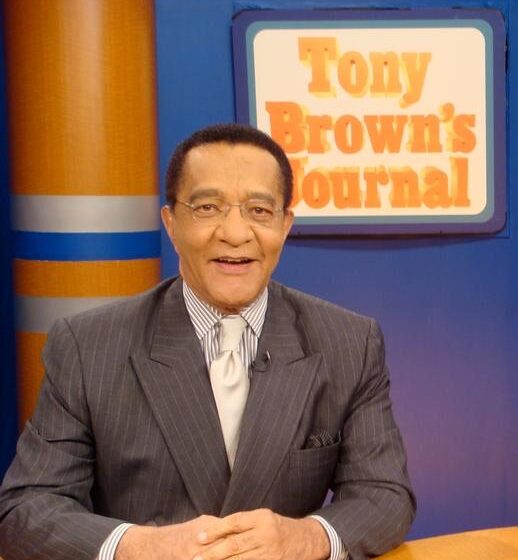
Tony Brown Obituary-Death: Pioneering PBS Journalist, Educator, and Civil Rights Advocate Remembered for Transforming American Media

The journalism world is mourning the loss of Tony Brown, the pioneering PBS journalist, educator, author, and civil rights advocate who died at the age of 93. A trailblazer in American broadcasting, Brown dedicated more than five decades to using television as a platform for education, dialogue, and social change. His passing marks the end of an extraordinary career that reshaped public discourse and expanded opportunities for generations of Black journalists and media professionals.
Tony Brown earned widespread recognition for his unwavering commitment to journalism that informed, challenged, and empowered audiences. At a time when African American voices were underrepresented in mainstream media, he created spaces where conversations about race, politics, education, economics, history, and culture could take place with depth and honesty. His work became a trusted source of information and inspiration for millions of viewers across the United States.
Born with a passion for storytelling and public service, Brown’s career extended far beyond traditional reporting. He believed journalism carried a responsibility not only to document current events but also to educate citizens, encourage critical thinking, and promote meaningful dialogue. Throughout his lifetime, he remained committed to these principles, becoming one of the most respected and influential figures in public broadcasting.
Among his greatest achievements was the creation and hosting of “Tony Brown’s Journal,” one of the longest-running nationally syndicated public affairs television programs in American history. The groundbreaking series became a cornerstone of public broadcasting, offering thoughtful discussions on issues affecting African American communities while exploring topics that resonated throughout society. The program distinguished itself through in-depth interviews, insightful analysis, and a willingness to address complex issues often overlooked elsewhere.
Over the course of its remarkable run, Tony Brown’s Journal featured conversations with presidents, lawmakers, civil rights leaders, scholars, entertainers, business executives, and community advocates. Brown’s interviewing style was characterized by careful preparation, intellectual curiosity, and a genuine desire to foster understanding rather than simply generate headlines. His ability to ask challenging yet respectful questions earned him admiration from colleagues and audiences alike.
Beyond television, Brown was an accomplished educator whose dedication to learning remained central to his life’s work. He believed education was one of the most powerful tools for personal growth and societal progress, and he devoted considerable time to mentoring students and aspiring journalists. Through lectures, university leadership, public speaking engagements, and his published works, he encouraged future generations to pursue knowledge, think independently, and engage actively in civic life.
Brown also established himself as a respected author, writing extensively on issues affecting American society, race relations, education, economics, and leadership. His books reflected the same thoughtful perspective that defined his broadcasting career, encouraging readers to examine history critically while considering practical solutions to contemporary challenges. His contributions to literature further strengthened his reputation as a public intellectual committed to meaningful dialogue.
Civil rights advocacy remained another defining element of Brown’s legacy. Throughout his career, he consistently used his platform to address inequality, expand representation in media, and promote economic empowerment within underserved communities. Rather than limiting his role to reporting on social issues, Brown actively encouraged viewers to become informed participants in shaping their communities and strengthening democratic institutions.
His influence reached well beyond television screens. Countless journalists, broadcasters, educators, and community leaders credit Brown with inspiring their careers through his example of integrity, professionalism, and fearless pursuit of truth. At a time when opportunities for Black media professionals were limited, his success demonstrated that excellence and perseverance could open doors for future generations.
Following news of his passing, tributes have poured in from fellow journalists, educators, public officials, former students, and viewers whose lives were influenced by his work. Many have reflected on his intellectual rigor, unwavering principles, and lifelong dedication to elevating public conversation. His colleagues remember him as a visionary who consistently challenged the media industry to broaden its perspectives and better represent the diversity of American society.
Although Tony Brown’s cause of death has not been publicly disclosed, those closest to him continue to celebrate a life defined by extraordinary achievement, public service, and lasting impact. Rather than focusing on the circumstances of his passing, admirers are honoring the remarkable legacy he leaves behind through decades of groundbreaking journalism, education, and advocacy.
Tony Brown’s contributions fundamentally changed the landscape of American media. By creating opportunities for underrepresented voices, fostering informed public discussion, and demonstrating the power of responsible journalism, he helped shape a more inclusive and thoughtful broadcasting industry. His work continues to influence news organizations, educators, and communicators who share his belief that journalism should serve the public with honesty, intelligence, and purpose.
As the nation reflects on his extraordinary life, Tony Brown will be remembered as far more than a pioneering broadcaster. He was a visionary journalist, dedicated educator, accomplished author, passionate civil rights advocate, and mentor whose influence extended across generations. His voice helped shape national conversations, his leadership inspired meaningful change, and his unwavering commitment to truth and education leaves an enduring legacy that will continue to inspire journalists, scholars, and community leaders for years to come. Though he has passed away, Tony Brown’s impact on American media and public life will never be forgotten.